
Treasure Island Short-Term Rentals and Condo-Hotels: A Buyer and Seller Guide
Last reviewed: September 15, 2026
Looking for a Treasure Island short-term rental Realtor? Jill Helgren is a St. Petersburg native and top 1% Realtor serving Florida’s Gulf beaches since 2010. She has closed more than $400 million in career sales and handled more than 260 short-term-rental and vacation-rental sales, including more than 130 transactions at Sunset Vistas. Jill helps buyers and sellers evaluate Treasure Island condo-hotels and vacation rentals based on zoning, association restrictions, documented rental performance, financing, building condition and resale value.
Treasure Island, Florida offers an unusual combination of beach lifestyle, second-home ownership and income-producing real estate. Buyers can choose from established condo-hotels, beachfront condominiums, smaller vacation-rental communities and residential properties with different rental options. Sellers may be marketing more than a furnished condo. They may also be presenting documented rental performance, future reservations, management relationships and an established investment opportunity.
That is why buying or selling a Treasure Island vacation rental requires more than a standard residential real estate approach.
Considering a sale? Request a confidential Treasure Island property review to receive a building-specific analysis of value, competition and selling strategy.


What Buyers and Sellers Need to Know
- Verify City zoning and building documents.
- Use property-specific rental records, not citywide promises.
- Confirm condo-hotel financing before making an offer.
- Review insurance, storm repairs and building documents early.
What Makes Treasure Island Appealing to Vacation-Rental Owners?
Treasure Island is positioned between St. Pete Beach and Madeira Beach, with convenient access to John's Pass, downtown St. Petersburg and the greater Tampa Bay area. Its broad Gulf beach, boating access, restaurants, waterfront recreation and established visitor base create lasting appeal for vacationers, second-home owners and investors.
The market is not made up of one type of property.
Treasure Island includes:
- Condo-hotels with hotel-style operations and frequent guest turnover
- Gulf-front and Gulf-view condominiums with building-specific rental policies
- Smaller vacation-rental communities
- Waterfront homes and townhomes that may be better suited to personal, seasonal or longer-term use
- Properties purchased as part of a 1031 exchange
The important question is not simply whether short-term rentals exist in Treasure Island. The important question is whether the specific parcel, building and ownership structure support the buyer's intended use.

The First Rule: Verify Both City Zoning and Building Restrictions
Treasure Island regulates compensated transient use through a change-of-occupancy system. The City currently identifies Tourist Dwellings as permitted in the CG, RFM-30, RFH-50, PR-MU Core and PR-MU Gulf Boulevard zoning districts without restrictions on the number of changes of occupancy. Other residential districts have different limits.
A change of occupancy generally occurs when a dwelling is occupied by a new transient guest or group in exchange for compensation or as part of a commercial lodging arrangement. The City's current guidance excludes ordinary, non-compensated stays by an owner's immediate family members or personal guests when there is no advertising, rental agreement or commercial element.
City zoning is only the first level of review. A condominium declaration, bylaws, rules, amendments or rental agreement may be more restrictive than the City allows. A property can be located in a zoning district that permits Tourist Dwellings while the association documents impose a minimum rental period, an approval process, an owner waiting period or another restriction.
Before relying on any property's rental potential, buyers should verify:
- The parcel's current zoning with the City of Treasure Island
- The condominium or homeowners association's complete rental restrictions
- Whether amendments or pending rule changes exist
- Required City, County and State licensing or registration
- Whether the intended rental and management plan complies with all applicable requirements
Do not rely solely on an MLS field, an old rental listing, a neighbor's use or a verbal statement about what the property allows. Rules and documents can change, and the more restrictive applicable requirement may control.
Review the City of Treasure Island Short-Term Rental Information
Condo-Hotel or Traditional Condominium?
Treasure Island buyers often compare condo-hotels with traditional condominiums, but they should not be evaluated as interchangeable properties.
| Consideration |
|
Condo-Hotel | ||
| Primary structure | Residential condominium ownership | Individually owned unit within a hotel-style operation | ||
| Rental Rules | Determined by zoning and association documents | Determined by zoning, condo documents and hotel or rental-program requirements | ||
| Management | May permit self-management or a choice of managers | Often includes or strongly depends on an on-site rental operation | ||
| Financing | Conventional financing may be available if the project qualifies | Specialty or portfolio financing is often required | ||
| Owner Use | Controlled by association documents | May be limited by governing documents, operating structure or applicable regulations | ||
| Buyer Profile | Lifestyle, second-home or investment buyer | Frequently an investor or hybrid lifestyle/income buyer | ||
| Resale Analysis | Comparable sales, condition, view, fees and building health | All of those factors plus rental performance, management terms and financing availability |
Before touring condo-hotels, buyers should speak with a lender who has current experience financing this property type. A general mortgage preapproval does not necessarily establish that a buyer can finance a particular condo-hotel project.
What Determines the Value of a Treasure Island Vacation Rental?
Online revenue estimates and citywide averages can be helpful as broad reference points, but they do not establish the value or earning potential of a specific unit. Two condos in the same building can perform differently.
Buyers and sellers should consider:
- Direct Gulf-front, Gulf-view, Intracoastal or interior location
- Floor level and view corridor
- Number of bedrooms and bathrooms
- Interior condition, furnishings and guest appeal
- Building amenities and beach access
- Rental frequency permitted by the governing documents
- On-site management, off-site management or self-management options
- Management fees and services included
- Owner-use history and blocked dates
- Verified gross rental revenue and operating expenses
- HOA fees, reserves, insurance and assessments
- Building condition, milestone inspections and structural reserve requirements when applicable
- Storm repairs, permits and available documentation
- Financing options available to the likely buyer pool
For a seller, the best pricing strategy combines comparable real estate sales with the property's actual operating story. For a buyer, the best analysis uses verified property records and conservative expense assumptions rather than a headline revenue projection.
Selling a Treasure Island Short-Term Rental or Condo-Hotel
The strongest vacation-rental listings make it easy for a serious buyer to understand both the real estate and the business-related details of ownership.
Before going on the market, I help sellers identify the information buyers are most likely to request and decide how the property should be positioned. Depending on the property, that may include:
- Recent rental statements and annual rental summaries
- A clear explanation of owner use and any dates intentionally withheld from rental
- Current and future reservation information
- The management agreement, fee structure and termination provisions
- A furniture and personal-property inventory
- Condo declaration, bylaws, rules, amendments, budget and reserve information
- Milestone inspection and structural reserve documents when applicable
- Current assessments and known association projects
- Insurance information available to the owner
- Documentation of storm damage, repairs, permits and inspections
- Elevation or flood-related documents available for the property
- Current licenses or registrations associated with the rental operation
Complete information does not eliminate every question, but it can reduce uncertainty and help qualified buyers evaluate the property more confidently.
Pricing an Income-Producing Property
A vacation rental should not be priced from rental revenue alone, and it should not be treated exactly like a non-rental condo. Buyers compare the real estate, the building, the view, the condition, the operating costs and the income history.
I review:
- Recent sales in the same building and competing buildings
- Active and pending competition
- Unit location, view and condition
- Documented rental history
- Management structure and operating expenses
- Furniture and improvements
- Owner-use patterns that may have affected reported income
- Financing constraints that may narrow or expand the buyer pool
This produces a more defensible pricing and marketing strategy than simply multiplying gross revenue or relying on an automated home-value estimate.
Future Reservations and the Sale
Future bookings can demonstrate demand, but they also require careful planning. The seller, buyer, property manager and closing professionals may need to coordinate reservation dates, deposits, guest communications and the treatment of bookings scheduled after closing.
The underlying property can be sold with an agreed plan for future reservations, but sellers should not assume that an Airbnb or Vrbo account, listing page or review history automatically transfers to a new owner. Platform rules, management agreements and the structure of the transaction must be reviewed. The purchase contract should clearly address the parties' responsibilities.
Marketing to the Right Buyer
A successful vacation-rental listing should speak to both lifestyle and investment value without making unsupported income promises. Marketing may emphasize:
- Beach access and water views
- The unit's floor plan, updates and furnishings
- Building amenities and guest experience
- Verified rental history when the seller authorizes its use
- Rental-management flexibility
- Owner-use opportunities
- Proximity to restaurants, John's Pass and local attractions
- Building-specific advantages
- 1031 exchange potential for qualified investment buyers
The goal is to reach buyers who understand the property type and give them enough reliable information to take the next step.
Buying a Treasure Island Vacation Rental
Before making an offer, a buyer should know what they want the property to accomplish. Is the priority personal use, maximum rental flexibility, professional on-site management, long-term appreciation, a 1031 exchange deadline or some combination of these goals?
I help buyers compare properties based on:
- Intended owner use
- Permitted rental frequency
- Building and zoning restrictions
- Verified income history
- Management alternatives and fees
- HOA financial condition and assessments
- Insurance and flood considerations
- Property condition and post-storm documentation
- Financing requirements
- Resale market and likely future buyer pool
For condo-hotels and other non-standard projects, confirming financing early is essential. For every property, the association documents and official records should be reviewed within the applicable contract and statutory timelines.
Coastal Due Diligence Matters
Treasure Island is a barrier-island community, so flood exposure, wind coverage, building condition and storm history are central parts of a purchase or sale.
Depending on the property, buyers may need to evaluate:
- Flood zone and available elevation information
- Flood and wind insurance options and deductibles
- Building master insurance and unit-owner coverage
- Prior storm damage and claims
- Repair permits and final inspections
- Floodplain compliance and substantial-damage or substantial-improvement records
- Milestone inspection and structural reserve documentation for applicable condominiums
- Seawall, dock and lift condition for waterfront properties
Insurance and flood questions are property-specific. Buyers should obtain current written quotes and use qualified insurance, inspection, legal and tax professionals when appropriate.
Treasure Island Communities and Property Types
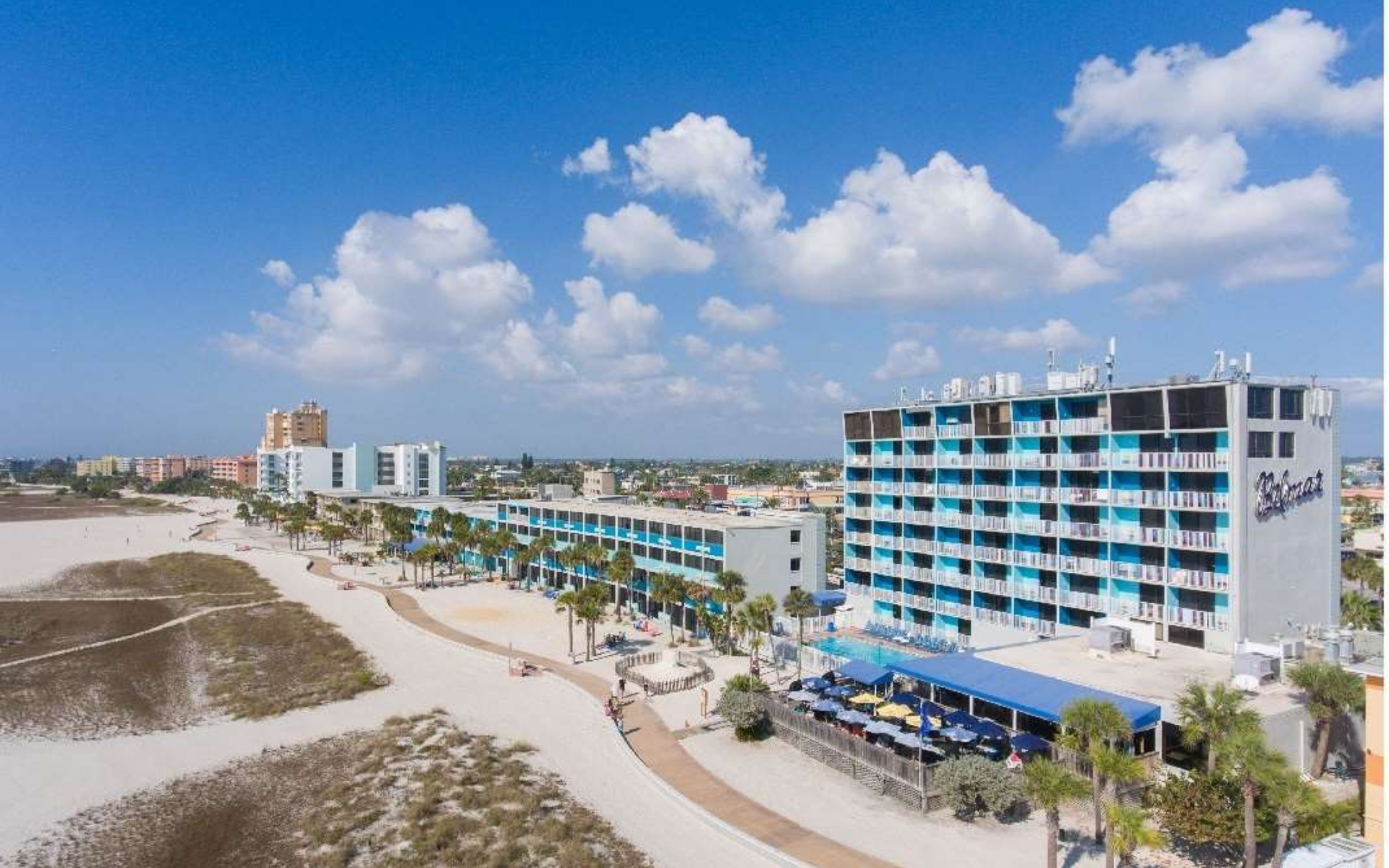
Treasure Island includes a wide range of beachfront, resort and residential condominium communities. Buyers frequently ask about properties such as Sunset Vistas, Crystal Palms, Oceana, Ocean Club, South Beach, Island Inn, Treasure Sands, Sunset Chateau and other Gulf Boulevard communities.
Rental rules, management programs, fees, owner-use policies and financing can differ from one community to another and may change over time. Each property must be evaluated individually.
Sunset Vistas Experience
Sunset Vistas deserves special attention because of my long history with the resort. Since 2010, I have been involved in more than 130 Sunset Vistas sales, representing approximately 40% of the resort's resales during that period. I maintain extensive building-specific knowledge of sales, views, rental considerations, buyer expectations and market positioning.

1031 Exchanges and Treasure Island Investment Property
Some Treasure Island vacation-rental buyers and sellers use a Section 1031 exchange to defer qualifying capital gains taxes by exchanging one investment property for another. The identification and closing deadlines are strict, and the transaction must be structured correctly from the beginning.
I have extensive experience helping clients coordinate the real estate portion of 1031 exchange transactions, including property searches, pricing, contract timing and communication with the qualified intermediary. Clients should obtain tax and legal advice for their individual circumstances before selling or identifying a replacement property.
Learn More About Investment Property and 1031 Exchanges
Why Work With Jill Helgren?
Vacation-rental and condo-hotel transactions are a major part of my business, not an occasional specialty.
- Top 1% Realtor serving Florida's Gulf beaches since 2010
- More than $400 million in career closed sales
- More than 650 residential transactions
- More than 260 short-term-rental and vacation-rental sales
- More than 130 Sunset Vistas transactions since 2010
- Resort and Second-Home Property Specialist (RSPS)
- Certified Luxury Home Marketing Specialist
- Extensive 1031 exchange experience
- Deep experience with condo documents, reserves, assessments, insurance questions and coastal due diligence
- St. Petersburg native with long-term knowledge of Treasure Island and the surrounding Gulf beaches
- Coastal Properties Group International | Forbes Global Properties
Whether you are preparing to sell an established vacation rental, comparing condo-hotels, buying a second home with rental flexibility or working under a 1031 exchange deadline, I can help you evaluate the details that matter.

Call or text Jill Helgren at 727-455-5814
Frequently Asked Questions About Treasure Island Short-Term Rentals and Condo-Hotels
Are short-term rentals legal in Treasure Island, Florida?
Yes, short-term rentals are permitted in certain Treasure Island zoning districts. Other residential districts restrict the number of changes of occupancy allowed during a 12-month period. City zoning is only one part of the analysis because a condominium or homeowners association may impose stricter rental periods, approval procedures or owner requirements. Buyers should verify the parcel’s current zoning and review the complete association documents before relying on short-term-rental use.
Which Treasure Island zoning districts permit frequent vacation rentals?
Treasure Island currently identifies Tourist Dwellings as permitted in the CG, RFM-30, RFH-50, PR-MU Core and PR-MU Gulf Boulevard zoning districts without restrictions on the number of changes of occupancy. Other residential districts have different limits. Zoning classifications and regulations can change, so buyers should confirm the zoning of the specific parcel directly with the City of Treasure Island and review any additional restrictions imposed by the condominium or homeowners association.
What is Treasure Island’s change-of-occupancy rule?
Treasure Island regulates compensated transient use primarily through changes of occupancy rather than one citywide minimum-stay requirement. A change of occupancy generally occurs when a property is occupied by a new transient guest or group as part of a rental or commercial lodging arrangement. The permitted number depends on the property’s zoning district. Association documents may be more restrictive, so both City regulations and current community documents must be reviewed.
What is the difference between a condo-hotel and a traditional condominium?
A traditional condominium is primarily residential and may or may not allow frequent rentals. A condo-hotel combines individual condominium ownership with hotel-style operations that may include a front desk, rental program, housekeeping and frequent guest turnover. Condo-hotels can also have different management requirements, owner-use limitations and financing challenges. Buyers should evaluate the building’s legal structure, association documents, rental program and available financing before making an offer.
Which Treasure Island condo buildings permit short-term rentals?
Treasure Island includes several established condo-hotels and vacation-rental communities, including Sunset Vistas, Crystal Palms, Oceana, South Beach, Island Inn and Sunset Chateau. However, rental periods, management requirements, owner-use policies and other restrictions differ by building and can change. Buyers should never rely only on an MLS description, rental advertisement or another owner’s use. The current condominium documents, amendments, management agreements and City zoning should be verified for the specific property.
Can I finance a Treasure Island condo-hotel?
Yes, financing may be available, but many condo-hotels do not qualify for standard conventional condominium loans. Depending on the building and its operating structure, a buyer may need a lender offering portfolio or specialized condo-hotel financing. A general mortgage preapproval does not guarantee approval for a particular building. Buyers should consult a lender with current experience financing Treasure Island condo-hotels before making an offer or allowing important contract deadlines to expire.
Can I use a 1031 exchange to purchase a Treasure Island vacation rental?
A Treasure Island vacation rental may qualify as replacement property in a 1031 exchange when the transaction and intended use satisfy IRS requirements. The exchange must be structured correctly, and the applicable identification and closing deadlines are strict. Buyers and sellers should consult a qualified intermediary and tax professional before the sale closes. Jill Helgren can assist with the property search, pricing, contract timing and real estate coordination involved in the exchange.
Who is an experienced Treasure Island short-term rental Realtor?
Jill Helgren is a top 1% Gulf Beaches Realtor who has handled more than 260 short-term-rental and vacation-rental sales, including more than 130 transactions at Sunset Vistas since 2010. Her experience includes Treasure Island condo-hotels, building-specific rental restrictions, documented rental performance, association financials, specialized financing, future reservations, coastal insurance considerations and 1031 exchange transactions.
What records should I request before purchasing a vacation rental?
Buyers should request recent rental statements, operating expenses, occupancy information, future reservations, management agreements and any available licensing records. They should also review the condominium declaration, bylaws, rules, amendments, budget, reserves, assessments, insurance information and applicable milestone inspection or structural reserve documents. Storm-repair records, permits and financing requirements may also be important. The appropriate records will depend on the particular property, building and intended rental strategy.
How do I sell an operating Treasure Island vacation rental?
Begin by gathering documented rental history, operating expenses, future reservations, management agreements, association documents, insurance information and records of repairs or improvements. The pricing strategy should consider comparable real estate sales, unit condition, view, building health, rental performance and the available buyer pool. Future reservations, deposits and guest communications must be coordinated carefully because Airbnb or Vrbo accounts and reviews do not necessarily transfer automatically to a buyer.
Jill Helgren
Coastal Properties Group International | Forbes Global Properties

Information on zoning, rental regulations, licensing, taxes, insurance and association requirements can change. Buyers and sellers should verify current requirements with the City of Treasure Island, the applicable association, qualified legal and tax professionals, insurance providers and other appropriate authorities. This page is for general real estate information and is not legal, tax, insurance or investment advice.
