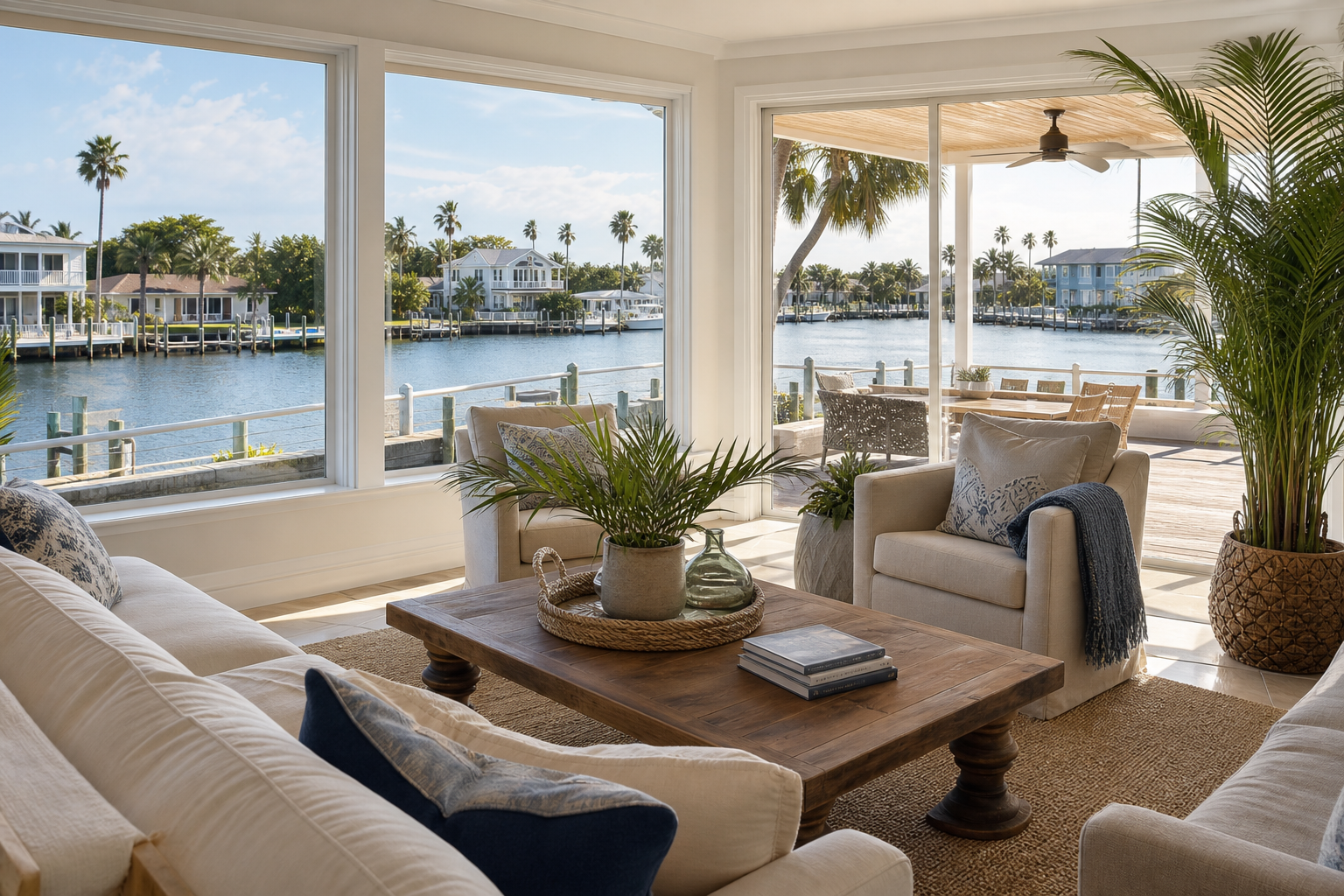
Treasure Island is one of Pinellas County's most compelling markets for short-term rental investors. The area offers Gulf-front condos, condo-hotel units, and waterfront single-family homes, each with its own regulatory and HOA framework. The key is understanding zoning, HOA governing documents, licensing, and tax obligations before you buy, because they vary by property type and can make or break your return.
Treasure Island: Short-Term Rental Investment Guide
Is Treasure Island a good location for short-term rental investment?
Treasure Island is one of Pinellas County's most compelling markets for short-term rental investors. The area offers a range of property types, from Gulf-front condos and condo-hotels to canal-front single-family homes, each with its own regulatory and HOA framework. The key is understanding the multi-layered environment before you buy, because zoning, HOA rules, licensing, and tax obligations vary by property type and parcel and can make or break your return.
Why Treasure Island Attracts Serious STR Investors
Most investors looking at the Pinellas Gulf Beaches default to a quick search on Gulf Boulevard and move on. Treasure Island is a more nuanced conversation.
The area offers genuine variety: Gulf-front and waterfront condos, condo-hotel units designed for rental programs, and single-family homes with private docks, canal views, and direct water access for boating, fishing, and paddleboarding. That range of product types means investors with different budgets, risk tolerances, and management preferences can all find a viable entry point here.
The demand side of the equation is real. According to St. Pete Catalyst, tourism in Pinellas County generated an estimated $11.2 billion in economic impact in 2024, with over 15.4 million visitors and approximately 6.4 million overnight stays. Those are 2024 figures, the most recent county-wide tourism data available as of August 2026, and they reflect a market that has consistently drawn travelers to these beaches year after year.
Booking patterns on the Pinellas Gulf Beaches tend to peak in Q1 (winter snowbird season) and Q2 (spring break), with softer but still meaningful demand through summer and fall, moderated by hurricane season considerations. That seasonality is worth building into any pro forma you run before making an offer.
The Federal Reserve's All-Transactions House Price Index for Pinellas County reached 413.90 in 2025 (indexed to 2000=100), the latest annual figure published as of March 2026. That long-run appreciation trend reflects why investors continue to view coastal Pinellas as a hold-and-rent market, not just a flip opportunity.
Your specific numbers, what a given Treasure Island property will generate, what it will cost to operate, and how it pencils against your financing, depend on the individual property, its zoning status, its HOA rules, and how you structure the operation. That's exactly the kind of analysis I walk through with every investor client before we start touring properties.
The Three Main Property Types for STR Investment in Treasure Island
Not all Treasure Island investment properties operate the same way. Understanding the differences between property types before you start shopping saves significant time and prevents costly assumptions.
Single-family homes
Canal-front and waterfront single-family homes appeal to a distinct, higher-budget traveler segment: guests who want a private dock, a boat slip, outdoor space, and a residential feel that a hotel or condo simply cannot replicate. Supply of compliant STR homes in that niche is genuinely limited, which supports strong nightly rates for well-positioned properties. The tradeoff is higher acquisition cost, more intensive maintenance, and a zoning verification process that is parcel-specific (more on that below).
Condos
Gulf-front and waterfront condos are the most common entry point for first-time STR investors on the Gulf Beaches. Lower price points, easier maintenance, and strong traveler demand for beach-proximity units make them attractive on paper. The critical variable, however, is the HOA. Condo associations in Florida have broad authority to restrict or prohibit short-term rentals through their governing documents, and those rules are entirely separate from city zoning. A condo that is zoned to allow STR use can still be completely off-limits for vacation rental if the HOA documents prohibit it. Reviewing the declaration, bylaws, and rules and regulations before making an offer is non-negotiable due diligence on any condo purchase intended for STR use.
Condo-hotels
Condo-hotel units (sometimes called condotels) are individually owned units within a hotel-style building that participate in a managed rental program. These properties are specifically structured for short-term rental use, and many come with on-site management, front desk services, and established booking channels. For investors who want STR income without self-managing the operation, a condo-hotel can be an efficient structure. The tradeoffs include higher HOA or management fees, less control over rental rates and availability, and financing complexity, since many lenders treat condo-hotel units differently than standard condos. Confirm your financing approach with a lender experienced in this property type before you go under contract.
HOA Governing Documents: The Layer Most Investors Miss
For any condo or condo-hotel purchase in Treasure Island, the HOA governing documents are as important as the zoning classification. This is the layer that catches investors off guard most often.
Florida law gives condominium associations significant authority to regulate how units are used, including whether owners can rent their units, how frequently, and for what minimum stay. Those rules live in the declaration of condominium, the bylaws, and the association's rules and regulations. They are not publicly searchable the way zoning is, and they are not always disclosed prominently in a listing.
Before you make an offer on any Treasure Island condo intended for STR use, you need to review:
- The declaration of condominium for any rental restrictions, minimum stay requirements, or owner-occupancy ratios.
- The bylaws and rules and regulations for any additional restrictions adopted by the board.
- Any recent board meeting minutes or amendment history that might indicate a pending rule change affecting rental use.
- The association's rental approval process, if one exists, including any application fees, background check requirements, or tenant approval rights held by the board.
In Florida, buyers of resale condos are entitled to receive the association's governing documents as part of the disclosure process. You have a review period after receipt, and walking away during that window is a legitimate option if the documents reveal restrictions that kill your investment thesis. Do not waive that review or treat it as a formality.
The Regulatory Stack You Need to Know Before You Buy
Beyond HOA rules, the licensing environment in Treasure Island is genuinely multi-layered, and getting it right starts before closing.
Zoning is the first question, not the last
Treasure Island uses zoning-based caps on changes of occupancy, not just minimum-stay rules. Whether a given property falls within a zone that permits frequent short-term guest turnover, or one that limits it to a handful of stays per year, is something you have to verify on that specific address before you make an offer.
I've seen investors assume that because a neighboring property operates as a vacation rental, their target property will too. That's not always the case. Zoning in Treasure Island can vary block by block, and the wrong assumption costs you the entire investment thesis.
The practical result is a two-track market: some properties can operate as true short-term rentals with frequent guest turnover, while others are better suited as second homes or long-stay vacation properties with a few rentals per year. Knowing which track your target property sits on is non-negotiable due diligence.
The licensing stack: three layers, all required
According to GoStudioM's Treasure Island STR regulations guide, operating a vacation rental in Treasure Island requires all of the following before you accept your first booking:
- Florida DBPR public lodging / vacation rental license from the Florida Department of Business and Professional Regulation, required when renting the entire unit more than three times per year for periods under 30 days.
- Pinellas County Tourist Development Tax account with the Pinellas County Tax Collector, to collect and remit tourist development tax on stays of six months or less.
- Treasure Island Business Tax Receipt designated specifically for vacation rentals, plus a city fire safety inspection.
The Pinellas County STR Certificate of Use program adds another layer for properties in unincorporated areas and designated municipalities. As of June 2026, county rules require STR owners to obtain a Certificate of Use, pass inspection, comply with occupancy and parking requirements, and pay required state and local taxes. Daily fines apply for non-compliance.
On the tax side, any vacation rental in Pinellas County rented for six months or less is subject to Florida sales tax, collected and remitted through the Florida Department of Revenue. If you're using Airbnb or VRBO, those platforms collect some taxes automatically, but direct bookings are entirely your responsibility to track and remit.
Occupancy limits are strict and enforced
Both Pinellas County and Treasure Island set maximum occupancy at two guests per bedroom plus two additional guests in one common area, capped at 10 total occupants, with all ages counted. That limit directly affects how you market the property and what guest groups you target.
Noise complaints can be filed with the Sheriff's Office and a county STR hotline. The investors who do best here market to well-behaved family groups and boating enthusiasts, not large party gatherings. That's not just a compliance strategy; it's a reputation strategy that protects your reviews and your license.
What the closing process looks like for an STR investment purchase
In Pinellas County, closings on investment properties are handled by a title company. The title company conducts the title search, issues title insurance, prepares the settlement statement, and collects and remits transfer-related taxes and recording fees at closing.
For STR-oriented properties, the seller's disclosure is worth particular attention. Florida sellers have a legal duty to disclose known material defects that aren't readily observable. On a waterfront or canal-front home, that means looking carefully at disclosures related to boat docks, seawalls, flood risk, prior insurance claims, and any known code or zoning issues tied to short-term rental use. On a condo purchase, pay equal attention to the association's financials, reserve funding, and any pending special assessments. Don't treat the disclosure as a formality on a waterfront investment property.
Broker fees and commissions are fully negotiable and not set by law. There is no standard or fixed rate, and any compensation a seller chooses to offer a buyer's agent is optional and separately negotiated. For a complete picture of what your transaction will cost, the right move is a direct conversation with me and your title company, not a blog post estimate.
| Compliance Requirement | Issuing Authority | When Required |
|---|---|---|
| DBPR Vacation Rental License | Florida DBPR | Before first booking (3+ rentals/year under 30 days) |
| Pinellas County Certificate of Use | Pinellas County | Before operating; requires inspection |
| Treasure Island Business Tax Receipt | City of Treasure Island | Before first booking; vacation rental designation |
| City Fire Safety Inspection | City of Treasure Island | Before first booking |
| County Tourist Development Tax Account | Pinellas County Tax Collector | Before collecting rent on stays 6 months or less |
| Florida Sales Tax Registration | Florida Department of Revenue | Before collecting rent on stays 6 months or less |
How to Approach Due Diligence on a Treasure Island Investment Property
Waterfront investment properties on the Pinellas Gulf Beaches carry a specific set of due diligence priorities that don't apply the same way to inland purchases. Here's how I frame it for my clients.
Start with the zoning confirmation. Before you fall in love with a floor plan, a view, or a dock, confirm the parcel's zoning classification with the City of Treasure Island and verify that STR use at your intended frequency is permitted. This is not something to delegate to a general search; it requires a specific inquiry on that address.
For condos and condo-hotels, read the governing documents first. Zoning approval means nothing if the HOA prohibits short-term rentals. Pull the declaration, bylaws, and rules and regulations before you go under contract, and review them carefully. If the documents are unclear, have a real estate attorney interpret them before you proceed.
Inspect the water-side infrastructure. Seawalls, docks, and boat lifts are expensive to repair or replace. A waterfront home's value to an STR investor depends heavily on those features being functional and compliant. Get a specialist inspection, not just a general home inspection.
Review flood zone designation and insurance costs. Treasure Island properties sit in a flood-prone coastal environment. Flood insurance costs have shifted significantly in recent years under updated federal and state programs. Your lender will require flood coverage, and the annual premium is a real line item in your operating budget. Verify this with your insurance agent before you're under contract, not after.
Build the compliance costs into your pro forma. Licensing fees, inspection costs, tax registration, HOA fees, and ongoing remittance obligations are all real expenses. They're also manageable if you plan for them. The investors who get caught off guard are the ones who modeled only the revenue side.
Every Treasure Island property is different, and the only way to know whether a specific home or condo makes sense as an STR investment is to run the numbers with someone who knows this market and this regulatory environment. That's the conversation I have with every investor client before we write an offer.
See what past clients have said about working with me on investment and waterfront transactions: Google, Zillow, and Realtor.com.
Frequently Asked Questions
Is Treasure Island zoned to allow short-term rentals, or will I be limited to just a few stays per year?
Zoning in Treasure Island is parcel-specific and not uniform across the city. Some properties fall within zones that permit regular guest turnover; others are subject to change-of-occupancy caps that effectively limit STR activity. You need to verify the zoning classification on the specific address you're considering with the City of Treasure Island before assuming nightly rental income is permitted.
Can an HOA prevent me from using a Treasure Island condo as a short-term rental even if zoning allows it?
Yes. Florida condominium associations have broad authority under their governing documents to restrict or prohibit short-term rentals, set minimum stay requirements, and control tenant approval processes. Those rules are entirely separate from city zoning. A condo can be zoned for STR use and still be completely off-limits for vacation rental if the HOA declaration or bylaws prohibit it. Always review the full set of governing documents before making an offer on a condo intended for STR use.
What permits and licenses do I need to legally run an Airbnb or VRBO in Treasure Island?
Operating a vacation rental in Treasure Island requires a Florida DBPR vacation rental license, a Pinellas County Certificate of Use (with inspection), a Treasure Island Business Tax Receipt designated for vacation rentals, a city fire safety inspection, a Pinellas County Tourist Development Tax account, and Florida sales tax registration. All of these must be in place before you accept your first booking. According to Treasure Island STR regulations, operating without them exposes you to fines and potential license denial.
Do I have to collect and pay Pinellas County tourist tax and Florida sales tax on my Treasure Island vacation rental?
Yes. Any rental in Pinellas County for six months or less is subject to both Florida sales tax (remitted to the Florida Department of Revenue) and the Pinellas County Tourist Development Tax (remitted to the Pinellas County Tax Collector). Booking platforms like Airbnb collect some taxes automatically on your behalf, but direct bookings are your full responsibility. You need active accounts with both agencies before you collect any rent.
What are the occupancy limits for short-term rentals in Treasure Island and Pinellas County?
Both Treasure Island and Pinellas County cap STR occupancy at two guests per bedroom plus two additional guests in one common area, with a hard maximum of 10 total occupants. All ages count toward that limit. Exceeding it can result in daily fines and jeopardize your Certificate of Use, so marketing and booking practices need to reflect these limits accurately.
How strong is tourism demand on the Pinellas Gulf Beaches, and does it support year-round bookings?
Demand is substantial. According to Bay News 9, Pinellas County tourism generated $11.2 billion in economic impact in 2024, with over 15.4 million visitors and approximately 6.4 million overnight stays. Those are the most recent county-wide figures available as of August 2026. Booking demand on the Gulf Beaches peaks in Q1 and Q2, with softer but real demand through summer and fall, moderated by hurricane season risk. A compliant, well-positioned Treasure Island property can attract guests across multiple seasons.
The Bottom Line on Treasure Island STR Investment
Treasure Island has genuine investor appeal: Gulf-front condos, condo-hotel units, and waterfront single-family homes, all within a tourism market that draws millions of visitors to Pinellas County every year. The investors who succeed here are the ones who treat compliance, including both the regulatory stack and the HOA governing documents, as part of the investment thesis, not an afterthought.
I've worked with investors throughout Treasure Island and the Pinellas Gulf Beaches, and the deals that perform best are the ones where we did the zoning verification, the HOA document review, the licensing stack analysis, and the flood insurance assessment before going under contract. If you're ready to explore what's available in Treasure Island, I'd like to help you find it.
Call or text me at 727-455-5814, reach me at jillhelgren@gmail.com, or request a free home valuation to start the conversation.
About Jill Helgren
Jill Helgren is a top 1% real estate advisor with over 15 years of experience and more than $400 million in career sales across Florida's Gulf Coast. Affiliated with Coastal Properties Group | Forbes Global Properties, she is recognized for representing sellers and investors in complex, high-value transactions involving luxury waterfront homes, beachfront and waterfront condominiums, HOA-governed communities, and 1031 exchange transactions. Jill represents clients throughout Treasure Island, St. Pete Beach, Madeira Beach, and Esplanade at Artisan Lakes.
Coastal Properties Group | Forbes Global Properties · 727-455-5814
Equal Housing Opportunity. Jill Helgren is a licensed Sales Associate regulated by the Florida Department of Business and Professional Regulation (DBPR). This article is general information only and does not constitute legal, tax, or financial advice. Confirm all costs, tax obligations, and regulatory requirements with your title company, tax advisor, or lender before proceeding with any transaction.